You Primer on The Anatomy of Cycling
It’s much more than glutes, hamstrings, and quads.
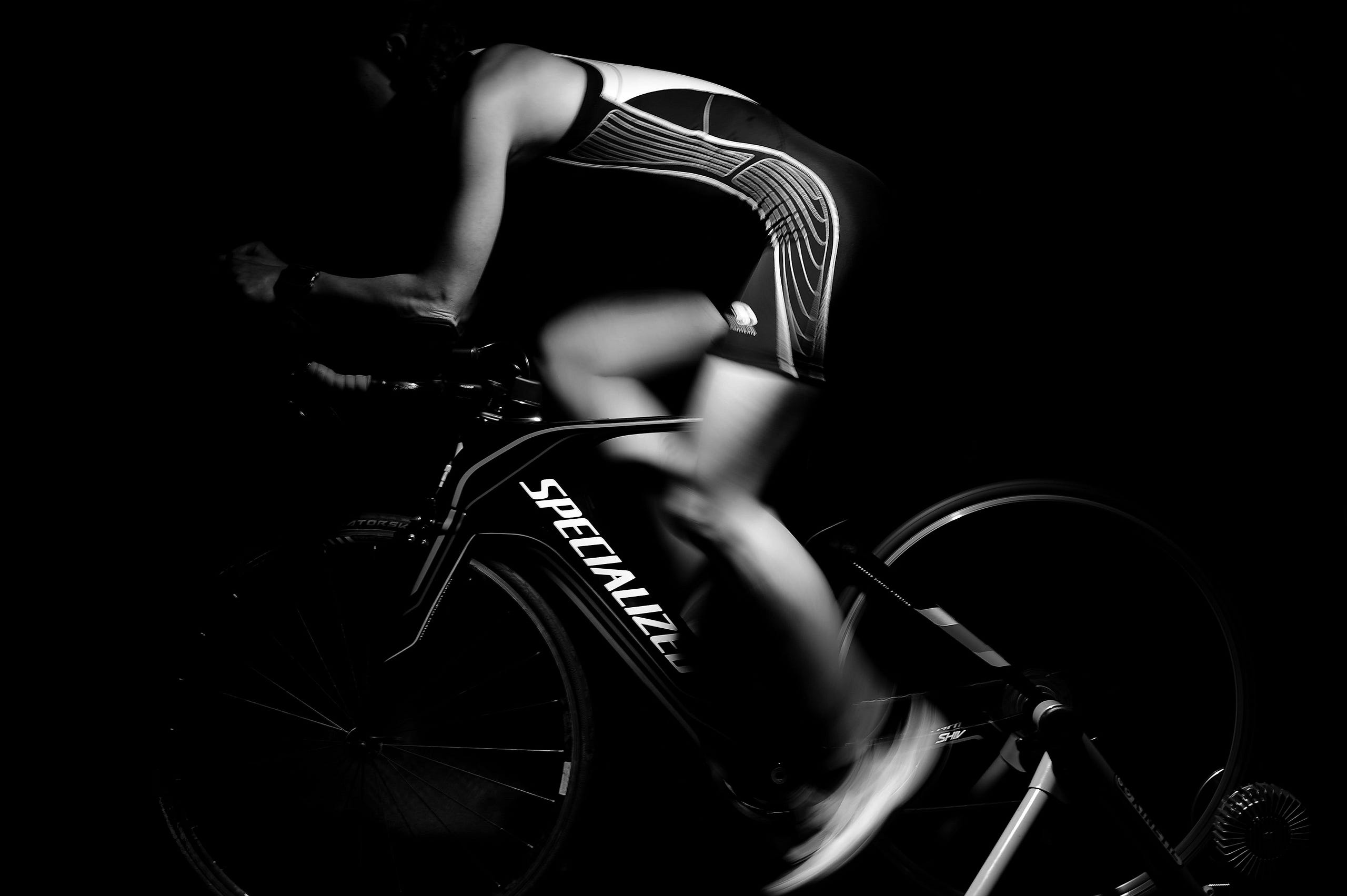
Cycling is an incredibly complex physiologic task. Since most of us learned to cycle when we were quite young, we probably don’t remember how much of a hurdle body control was. To ride effectively, dozens of muscles have to work synchronously, and understanding the functions and requirements of each can help you ride faster, longer, and better. Let’s first figure out where they are, then we’ll learn exactly what they do and how to take care of them in articles to come.
Where they are
To dig into this topic, we’re going to need to brush up on some anatomy, so let’s dive right in.
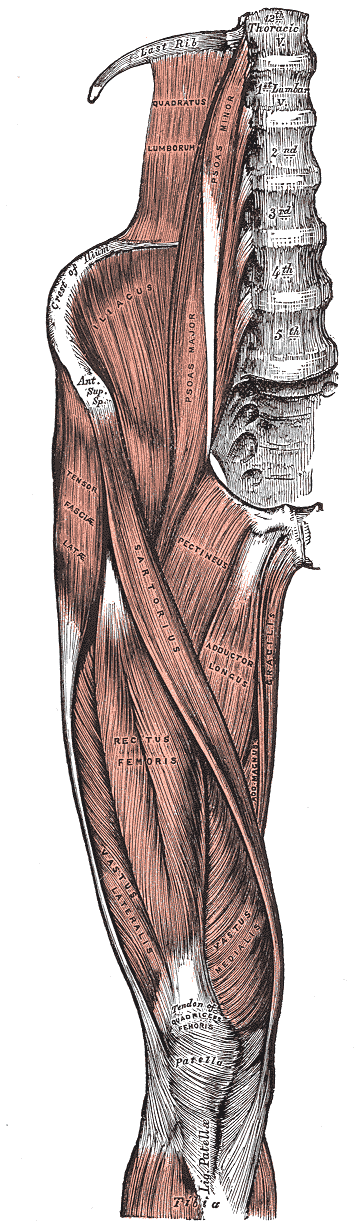
Quads
The bundle of four muscles that we generally refer to as the quadriceps are a key element in the pedal stroke, but all five of them have their own distinct functions in cycling. That’s right, I said 5. People from an anatomy background don’t refer to the fifth as a part of the quads, but I’m putting it there because it’s a long strap muscle that runs right over them. It has similar function to the quads, and a does a bit of work when turning the pedals.
The Muscles
Rectus Femoris (Rec Fem)– The most complex muscle in the group, it cross two joints, the hip and the knee. This muscle takes off from the anterior inferior iliac spine of the front of the pelvis and attaches to the patellar tendon at the knee. AIIS →Patellar Tendon
Vastus laterals (VL)– the muscle on the lateral (outside) part of the quads. You can feel it along the outside of your thigh. This one originates on the femur and inserts at the patellar tendon. Upper, Lateral Femur → Patellar Tendon
Vastus medialis (VM)– on the inside of the thigh, this muscle also originates from the femur and inserts at the patellar tendon. Upper, Medial Femur → Patellar Tendon
Vastus intermedius (VI)– buried beneath the three prior muscles, the intermedius is in the center of the femur, attaching there and inserting at the patellar tendon as well. Upper, Middle Femur → Patellar Tendon
Satorius — not technically part of the quads, this muscle is another two joint muscle. It originates from the lateral (outside) of the pelvis and inserts way down past the knee, on the medial side of the tibia. This is the body’s longest muscle, this is the long, skinny muscle you can see across the top of a powerlifter’s leg. ASIS → Medial Tibia
What they do
Rec. Fem. — this complex muscle does two things, while the vastus muscles all do just one. Since it crosses the hip and the knee, it can flex the hip, pulling the leg up and/or flexing the trunk forward, and it can also straighten the knee, like the other quads.
VL, VM, VI — These three work together to extend the knee, straightening out the leg. There are slight differences in what they do in walking, jumping, and dynamic exercise, but in cycling they all do the same action.
Sartorius — This muscle doesn’t have a large role in cycling because its main function doesn’t work well on the bike. Sartorius crosses the hip and the knee, but in a different way than Rec Fem. Because it runs from the outside of the pelvis to the inside of the tibia, it can flex the hip and the knee and it can also externally rotate the leg, pointing the knee away from the body. This muscle is commonly called the “gum on my shoe” muscle, since it lets you pick up your leg and rotate it so you could see if there’s gum on your shoe.
Hamstrings
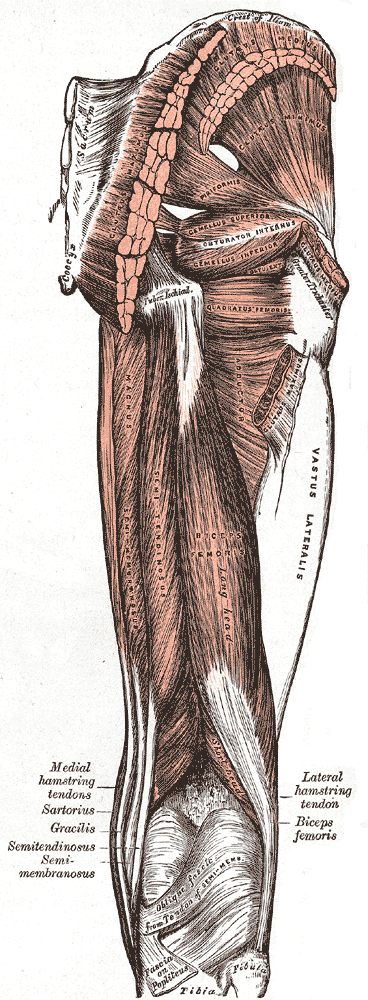
Another famous bundle of muscles, the hamstrings are made up of four distinct muscles that work in two pairs to help your pedal stroke.
The Muscles
Biceps femoris long and short head — These two muscles run to the same spot, but start from a different one. In cycling, they work as a unit, but they can work separately in other sports. The long head originates from your ischial tuberosity (your sit bone) and inserts on the head of your fibula (the small bone on the outside of your shin). The short head originates on the back of the femur and inserts at the same spot. Ischial Tuberosity → Lateral Tibia
Semitendonosus and Semimembranosus — These two muscles both originate on your ischial tuberosities and both insert down on the medial side of the back of your tibia. Like the two muscles of the biceps, they work in tandem when you’re riding a bike. Ischial Tuberosity → Medial Tibia
What they do
In cycling, all four of these muscles work together to extend the hip and flex the knee. They’re the exact opposite of rectus femoris and almost the opposite of the rest of the quads as well. Their functions in a pedalstroke are a bit different from one another, but similar enough to be bundled up for now.
Glutes
We have three glute muscles to worry about, and they all perform different roles in the pedal stroke, so we need to break them apart one by one. Anatomically, they’re all pretty similar, so it’s easy to locate them as a start.
The Muscles
Glute Max — This is the famous one, the muscle that gives your butt its rotundity and is possibly the strongest single muscle in your body. It originates from the medial side of the back of the pelvis and the lateral part of the sacrum (the last few, fused vertebrae at the bottom of your spine), and attaches into both the femur and the IT band. Sacrum → Femur and IT Band
Gluteus Medius — This guy is buried underneath and a little bit in front of glute max, on the side of your pelvis. It’s the most lateral (outside) of your glute muscles, taking off from the lateral side of your pelvis and attaching to the greater trochanter of your femur, the widest part of your hip. It’s a bit of the femur that sticks out so that muscles can attach. Lateral Pelvis → Lateral Femur
Gluteus Minimus — As you can tell from the name, this is the smallest of the three glute muscles. Minimus is a fan shaped muscle that’s buried under the other two glutes. It originates from the same spot as medius, just underneath it. It also inserts in the same spot, on the greater trochanter. Lateral Pelvis → Lateral Femur
To see these, check out the upper, cut out portions of the image above.
What they do
Glute Max — this is the major hip extensor, working in tandem with the hamstrings to straighten out the hips. It pulls the back of the pelvis and the femur closed together, pulling you up straighter or pushing your leg out farther.
Glute Med. and Min — these two work together to perform a very different function than Max. Glutes med and min are adductors of the leg, the pull it out and away from the body. If you’re seated, they’re the muscles that pull your legs out wider. If you’re standing, they perform a slightly different function. When you stand on one leg, glutes med and min hold your pelvis up so your trunk doesn’t tilt over to the side.
Lower Leg
There are a lot of muscles that originate on the lower leg, but we’re going to focus on three of them. These three have the most to do with cycling, since most of the others are involved in foot positioning and toe motion. When you’re locked into a cycling shoe and pedal, they don’t make much difference.
The Muscles
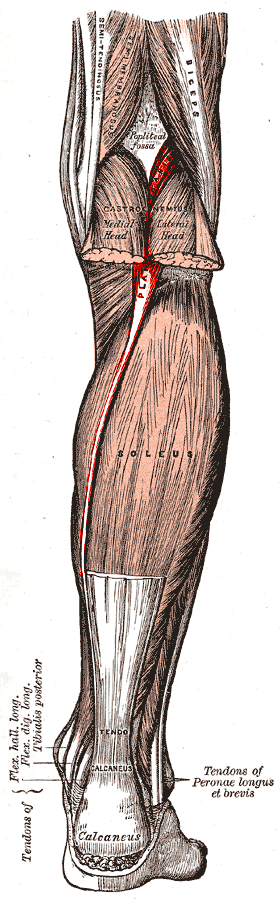
Gastrocnemius — this is the most famous of the calf muscles, situated on the back of the lower leg. It’s more complicated than most people think, as it has two heads that run up across the knee. The lateral head runs up the back of the knee on the outside and the medial head runs up the inside. They both attach to the femur. The other end of this prominent muscle inserts on the Achilles tendon. Posterior Femur → Achilles Tendon
Soleus — the soleus is the less famous, but still incredibly important muscle of the calf pair. It’s buried underneath the gastroc, taking off from the soleal line of the tibia and following the gastrocnemius down to the Achilles tendon. Posterior Tibia → Achilles Tendon
Tibialis Anterior — this is the only muscle on the front of the lower leg that we’ll be discussing. Tibialis anterior runs from the front of your tibia (just lateral to the most prominent part of your shin) to the top of the foot. Anterior Tibia → Top of Foot
What they do
Gastrocnemius and soleus have similar paths and therefore similar functions, but they way they perform their functions are quite different.
Gastrocnemius — since the gastroc crosses two joints, it can perform two actions, just like the muscles we saw higher up the leg. It’s a very weak knee flexor, bending the knee a bit, and a very strong foot plantar flexor, pushing the foot down into the floor. If you’re performing jumping calf raises, this muscle is the one doing the work.
Soleus — this guy only crosses one joint, and so can only perform one action, but it’s an essential one in our daily lives and on our bikes. Soleus is also a plantarflexor, like gastrocnemius, but works in a different way. Soleus performs slow plantar flexion, the kind that you need to maintain your balance if you lean forward. Gastrocnemius is for explosive movements while the soleus is for the slow ones. As an easy example of their difference, gastroc is used as a plantar flexor when walking while soleus is used while standing still.
Tibialis anterior — TA is a dorsiflexor, a major muscle that pulls your foot up toward your head. There are many more dorsiflexors, but this is the strongest one you have, so it’s what we’ll be focusing on when analyzing a pedal stroke.
The Others
There are many other muscles that support your cycling, especially of the upper limb and trunk. We could go through many of them, but I’m just going to highlight a couple that directly help with pedaling.
The Muscles
Adductor group — This group contains many muscles responsible for pulling your leg toward your body from the side and internally rotating your leg for unclipping from your pedals. The originate from the lower, front part of your pelvis and insert along the inside of your femur. Medial, Lower Pelvis → Medial Femur
Iliopsoas — This deep abdominal muscle is a major hip flexor, and lies deep within your abdomen, almost on the back wall. It originates from the lumbar spine and the top of the pelvis, then inserts on the top of the femur.
Internal and External Obliques — these abdominal muscles wrap around your whole trunk, though they’re often associated just with the sides. They originate from the pelvis and rectus sheath and insert on the lower ribs. Lower Ribs → Pelvis
What They Do
Adductor Group — these muscle pull your knee in toward your body and allow you to point it toward the opposite side. They also rotate your leg inward, allowing you to pop your foot out of the pedal.
Iliopsoas — This is the major flexor of the hip, it bends your leg at your waist, doing the work of the upstroke as you prepare to pedal again.
Obliques — These are the major stabilizers of the trunk. They keep your butt planted on your saddle and give you that smooth, Tom Domoulin pedal stroke when you’re at full chat.
Okay, that was a lot of anatomy. I know. But we’re done now, great job! In other articles, we’ll talk about how to care for all these muscles and get into some more details about how they work. But there’s your way too detailed primer of the muscles of cycling. I’m sure you don’t have all that stuff memorized (and you don’t need to) so feel free to refer back to this as you need. Thanks for reading and be sure to Follow through the link below for the next pieces of this series.
 RVA Endurance PT
Leave a comment